Canada
 Français
 Español
 International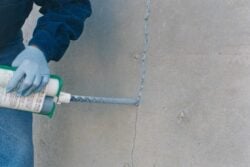
REZI-WELD GEL PASTE is a high-viscosity, two-component epoxy adhesive designed for structural bonding, anchoring, and repair in concrete. Its non-sag, paste-like consistency allows it to stay in place on vertical and overhead surfaces, making it well suited for applications where liquid epoxies may run or drain out. The material can be troweled, brushed, or injected, and is used to fill cracks, set dowels and rebar, bond concrete to concrete or metal, and seal surfaces prior to injection work.
The product develops strong mechanical properties and bond strength when properly mixed and applied, helping create a solid connection between substrates. It meets ASTM C 881 and AASHTO M 235 requirements and is commonly used across horizontal, vertical, and overhead repairs, as well as for anchoring and general concrete restoration. Its easy-to-mix, color-coded packaging and moisture-insensitive formulation support consistent field application across a range of jobsite conditions.
Product Data Sheet

| 03 01 00 03 63 00 |
|

REZI-WELD™ GEL PASTE
Gel Consistency-Thixotrophic, Multi-Purpose Construction Epoxy
DESCRIPTION
REZI-WELD GEL PASTE is a high viscosity, rapid setting, thixotrophic, structural, epoxy-based, chemical anchoring/bonding adhesive and injection resin. REZI-WELD GEL PASTE provides high mechanical properties and bond strength to concrete and various other substrates. REZI-WELD GEL PASTE is a two-component, moisture-insensitive construction epoxy, which can be troweled, brushed, injected, or pumped.
USES
REZI-WELD GEL PASTE is an easy-to-mix, easy-to-apply paste ideal for filling cracks, anchoring, doweling, and making small patches and general repairs in horizontal, vertical, and overhead concrete surfaces. It is also suitable for surface sealing prior to pressure injection. When used as an adhesive, REZI-WELD GEL PASTE fills all voids between surfaces to be bonded.
FEATURES/BENEFITS
- Patches and repairs vertical or overhead concrete surfaces.
- Fills all gaps between surfaces to be bonded, unlike liquid epoxy adhesives, which might run out and reduce the bond area.
- Easy to mix and apply with its trowel-grade consistency.
- Offers high viscosity, high modulus, and high strength characteristics.
- Color-coded, innovative, unitized bulk packaging assures proper mixing of two components.
- Excellent bond strength suitable for cap sealing.
- Available in side-by-side and universal cartridges.
PACKAGING
1 Quart (.95 Liter) Units
1 Gallon (3.79 Liter) Units
2 Gallon (7.58 Liter) Units
10 Gallon (37.85 Liter) Unit
COVERAGE
One gallon (3.79 L) neat yields 231 cubic inches (3785 cm3).
SHELF LIFE
One year when stored in unopened containers in dry conditions. Store between 40° – 95° F (4.4° – 35° C). Do not store product outside.
SPECIFICATIONS
- AASHTO M 235, Type I, II, IV & V, Grade 3, Classes B & C
- ASTM C 881, Type I, II, IV & V, Grade 3,
Classes B & C - Various Departments of Transportation Approvals
TECHNICAL DATA
The following physical properties were determined at a 1:1 mix ratio of A:B by volume, cured at 77° F (25° C) & 50% RH.
| Test Method | Actual | Required per ASTM C 881, TYPE IV |
| Gel Time Per ASTM C 881 | 45 minutes | Minimum 30 minutes |
| Viscosity Per ASTM C 881 Mixed |
1/2″ Bead-No Sag | Minimum 1/4″ Bead-No Sag |
| Compressive Strength Per ASTM D 695 @ 1 day @ 7 days |
9,000 psi (62 MPa) 11,500 psi (79 MPa) |
Not Required Minimum 10,000 psi (70 MPa) |
| Compressive Modulus Per ASTM D 695 @ 7 Days |
400,000 psi (2758 MPa) | Minimum 200,000 psi (1,400 MPa) |
| Slant Shear Bond Strength Per ASTM C 882, Moist Cured @ 2 days (Old to Old Concrete) 1,500 psi (10 MPa) Minimum 1,000 psi (7.0 MPa) @ 14 days (Old to Old Concrete) 2,000 psi (14 MPa) Minimum 1,500 psi (10.0 MPa) @ 14 days (New to Old Concrete) |
1,500 psi (10 MPa) 2,000 psi (14 MPa) 2,500 psi (17 MPa) |
Minimum 1,000 psi (7.0 MPa) Minimum 1,500 psi (10.0 MPa) Minimum 1,500 psi (10.0 MPa) |
| Tensile Elongation Per ASTM D 638 @ 7 days |
1.5% | Minimum 1% |
| Heat Deflection Temperature Per ASTM D 648 @ 7 days |
125° F (53° C) | Minimum 120° F (50° C) |
| Linear Coefficient of Shrinkage Per ASTM D 2566 @ 7 days |
0.003 | Maximum 0.005 |
| Water Absorption Per ASTM D 570 @ 7 Days |
0.51% w/w | Maximum 1.0% w/w |
Color:
Part A … White Pot Life: 45 minutes @ 77° F (25° C)
Part B … Black Cure time: 7 days @ 77° F (25° C)
Mix Ratio: 1:1 by volume
All technical data is typical information, but may vary due to testing methods, conditions, and operators.
APPLICATION
Surface Preparation… Mechanically roughen or abrasive blast concrete substrate. Remove all unsound concrete and provide a profiled surface. Substrate must be structurally sound, dust-free, and free of grease, oil, dirt, curing compounds, release agents, or any other surface or penetrated contaminants, coatings, sealers, or similar that will adversely affect bond. Sanding, acid etching, cup-grinding, or wire-abrading are not approved concrete surface preparation methods. Vacuum or blow away dust with oil-free compressed air.
Smooth surfaces, such as wood, require sanding or other mechanical abrasion. Exposed steel surfaces should be sandblasted and vacuumed clean . . . if not possible, degrease the surface and use sandpaper or a wire brush to reveal continuous, bright metal.
Mixing (Bulk Units)…Condition all components to above 65º F (18.3° C) for 24 hours prior to use. Use the double-boiler method or store material in a warm room for 24 hours prior to application. Pre-mix each component. Mechanically mix at slow speed (600-900 rpm) using a drill and Jiffy® Blade or drum mixer for three minutes or until completely mixed while scraping the sides to ensure complete blending of components. The mixed product should be uniform gray in color and not show streaks. Avoid air entrapment. Mix only very small quantities by hand for a minimum of three minutes and uniform gray in color. Scrape the sides of the container to ensure complete blending of the components. Mix only the amount of epoxy that can be applied within the product’s pot life. Pot life will decrease as the ambient temperature and/or mass size increases.
Metal Anchors in Preformed Holes in Concrete … Preformed holes should be approximately 1/8″ (3.175 mm) larger in diameter than the anchor bolt diameter. The depth of the hole should be 10-15 times the bolt diameter. Fill the hole from the bottom up, about half way, with mixed epoxy and place the bolt, dowel, or rebar. Top off with more epoxy and finish. All anchoring and doweling configurations must be approved and/or designed by an engineer.
Cracks in Vertical or Overhead Structures … For non-moving cracks and joints, use a trowel to apply the paste full depth and strike off flush at the surface in a single pass. For structural crack injection repairs, use a dual-component gel pump. REZI-WELD GEL PASTE is not recommended for overhead applications.
Patches in Concrete Structures … REZI-WELD GEL PASTE makes a high-strength material for patching, topping, grouting, and repairing spalls and other defects in concrete. Average thickness of the patch or topping should be no greater than ¼” to ½” (6.35 to 12.7 mm) per lift, not to exceed a total depth of 1 ½” (38 mm).
Surface Sealing … Apply mixed epoxy over entire length of crack to be pressure injected. Ensure complete coverage to avoid leaking. Adjacent concrete surfaces must be mechanically abraded to ensure a proper bond. Allow for suitable cure time prior to injecting.
Bonding Fresh Concrete to Hardened Concrete or Hardened Concrete to Hardened Concrete … Use a stiff masonry brush to apply a layer of mixed epoxy to concrete surfaces. Application rate should be 85-100 sq. ft./gal. Place fresh or hardened concrete to mixed REZI-WELD GEL PASTE prior to epoxy becoming tack-free. If REZI-WELD GEL PASTE becomes tack-free prior to application of fresh or hardened concrete, consult a W. R. MEADOWS representative.
Other Bonding … To bond metal to concrete, apply a layer of the adhesive [at 85-100 sq. ft./gal. (20 mils)] to the prepared surface and join immediately. Clamping pressure, beyond what will hold parts in place, is not necessary.
Cleanup … Clean tools and equipment immediately with toluene or xylene. Clean equipment away from all ignition sources.
PRECAUTIONS
Failure to follow all industry standard practices, such as the American Concrete Institute (ACI), will compromise the performance of REZI-WELD GEL PASTE. Not intended for submerged or continuously saturated conditions. High ambient (air), product, and substrate temperatures will decrease working time. Overhead applications must be approved and/or designed by a professional engineer to ensure durability and long term bonding/anchoring. Creep and service temperature must be considered in structural applications. Cold ambient (air), product, and/or substrate temperature will increase working, cure, and bolt-up time. This data sheet does not supersede engineering or architectural recommendations or drawings. A professional engineer must determine suitability of REZI-WELD GEL PASTE for anchoring, doweling, or similar applications. This is not a standalone engineering document. DO NOT DILUTE. Mix complete units only. Not recommended for use when the ambient and substrate temperature is below 40° F (4° C) for the past 24 hours or when rain is imminent. Do not seal cracks under hydrostatic pressure. Do not warm epoxy over direct heat.
HEALTH AND SAFETY
Avoid breathing vapors or allowing epoxy-containing solvent to contact skin. Should this material come in contact with the skin, wash thoroughly with soap and water, not solvent. Unused epoxy will generate excessive heat, especially in large quantities. Unused epoxy should be mixed with dry sand in the container to help lower heat. Refer to Safety Data Sheet for complete health and safety information.
LEED INFORMATION
May help contribute to LEED credits:
- IEQ Credit 4.1: Low-Emitting Materials – Adhesives and Sealants
- MR Credit 2: Construction Waste Management
- MR Credit 5: Regional Materials
Material last updated November 2014.


Sustainability
Tech Literature
Videos
REZI-WELD Epoxy Systems