Canada
 Français
 Español
 International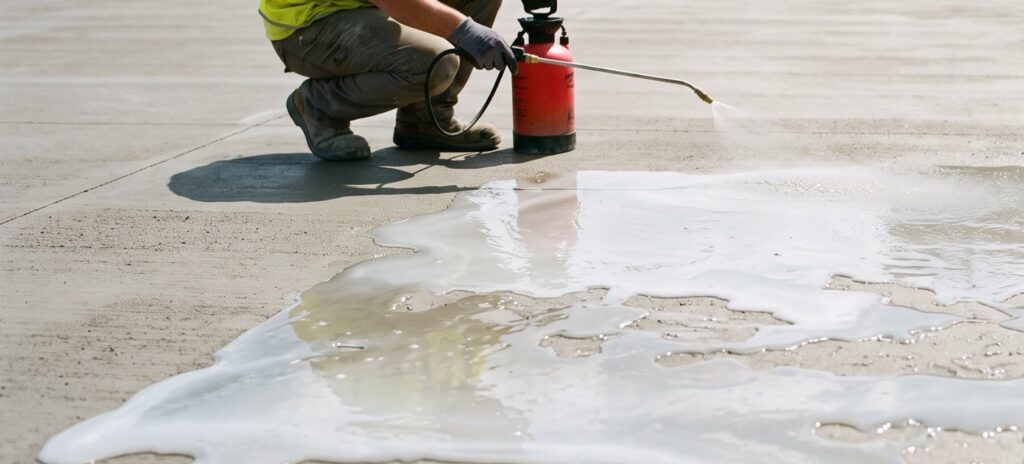
Concrete may be one of the most durable materials on the planet and is the second most consumed resource on the planet, after water, but its long-term performance depends heavily on proper curing, sealing, and protection. That’s why products like curing compounds, sealers, and densifiers exist: to help concrete surfaces reach their full potential. But even with the best products available, application technique can make or break the results. One of the most common, and most preventable, mistakes is puddling.
If you’ve been on a jobsite long enough, you’ve seen it happen. A curing compound, sealer, or densifier is sprayed or poured onto the surface, and before long, small pools or “puddles” form where the liquid collects. At first glance, this may not seem like a big deal. After all, more product means more protection, right? Unfortunately, the opposite is true.
In this blog, we’ll break down what puddling is, why it’s a problem for concrete treatments, and most importantly, how to prevent it from happening. Whether you’re a contractor applying the product yourself or a distributor helping customers troubleshoot, understanding puddling is essential for ensuring successful, long-lasting results.
WHAT EXACTLY IS PUDDLING?
Puddling occurs when liquid-applied products, such as curing compounds, sealers, or densifiers, gather in low spots or remain unevenly distributed across a slab. Instead of forming a uniform, thin film or soaking in evenly, the product builds up in concentrated pools.
Concrete surfaces are rarely perfectly level. Small depressions, texture differences, or over-application can cause liquids to settle in areas instead of dispersing evenly. This results in an uneven finish and can lead to several issues depending on the type of product being used.
WHY PUDDLING IS A PROBLEM
While each product reacts differently, puddling almost always creates complications. Here’s why:
- For Curing Compounds: Curing compounds are designed to form a thin, consistent membrane over fresh concrete to reduce moisture loss. When puddles form, those areas cure differently from the rest of the slab. The excess material can lead to soft spots, uneven curing, discoloration, or peeling later. In decorative concrete especially, this is a recipe for callbacks.
- For Sealers: Sealers are meant to create a uniform barrier against moisture, chemicals, and stains. Puddled areas often remain tacky or glossy compared to the rest of the surface. Worse, they can trap air bubbles or dust, leaving behind a blotchy appearance. In traffic areas, thick puddled sealer may even peel or flake prematurely.
- For Densifiers: Densifiers work by chemically reacting with free lime in the concrete to form calcium silicate hydrate (CSH), a compound that strengthens the surface. If puddles form, the product doesn’t react evenly. Some areas may end up oversaturated and leave behind white residue, while other areas receive less benefit. The result? Inconsistent performance and an unattractive finish.
COMMON CAUSES OF PUDDLING
Understanding the causes of puddling makes it easier to prevent. Here are the most common culprits:
- Over-application: Applying too much product in one pass.
- Uneven spraying: Using the wrong tip, inconsistent coverage, or standing too close with the sprayer.
- Surface depressions: Natural low spots or imperfections in the concrete slab.
- Improper equipment: Using brooms, rollers, or sprayers that aren’t suited for the product type.
- Not backrolling: Skipping the final step of evening out excess liquid after application.
HOW TO PREVENT PUDDLING
The good news is that puddling can almost always be avoided with the right approach:
- Follow Manufacturer Coverage Rates: Every curing compound, sealer, and densifier has a recommended coverage rate, typically expressed in square feet per gallon. These values are designed to ensure consistent performance and are often based on ideal surface conditions. But in the field, conditions vary, especially when it comes to concrete porosity, surface profile, finishing techniques, and environmental factors.
That’s why conducting a test area or mock-up prior to full application is always recommended. Not only does this help verify that the concrete accepts the product at the expected coverage rate, but it also sets clear expectations for the appearance and performance among all stakeholders on the project team. A test section helps identify areas where the product may sit on the surface instead of penetrating properly, an early indicator of potential puddling issues.
Applying more than the recommended amount doesn’t improve performance, it increases the risk of puddling. Always measure your surface area, consult product data sheets, and confirm coverage in your mock-up before proceeding with full-scale application.
- Use the Right Application Equipment: Choose the correct sprayer tip for the viscosity of the product. For sealers, a fan tip often works best to provide even coverage. For densifiers, a low-pressure sprayer is usually recommended. Always check manufacturer guidelines.
- Backroll or Broom Excess Material: After spraying, use a clean roller or broom to even out the application. This is especially important with sealers, as backrolling helps eliminate puddles, distribute product evenly, and improve penetration.
- Address Low Spots Beforehand: If you know a slab has depressions, pay extra attention to those areas. Spread product away from them during application to prevent buildup. In some cases, filling or grinding low spots prior to finishing may be necessary.
- Work Methodically: Apply products in consistent, overlapping passes, keeping a steady pace. Avoid stopping too long in one spot, which can lead to extra material being laid down.
WHAT TO DO IF PUDDLING HAPPENS ANYWAY
Even with best practices, puddling can still occur. Here’s what to do if you catch it early:
- While still wet: Spread the product out using a broom, roller, or brush. Work quickly to even the surface before it starts to dry.
- If partially dried: For sealers, lightly backroll the area to redistribute. For densifiers, brooming the excess can help.
- If fully dried: You may need to mechanically remove the excess (scraping or light sanding) and reapply according to instructions.
Catching puddling early is always easier than fixing it later, so regular inspection during application is key.
In the world of concrete treatments, consistency is everything. Whether applying a curing compound to fresh concrete, sealing a decorative floor, or densifying an industrial slab, the goal is the same: even coverage for even performance. Puddling undermines that goal, leading to weak spots, surface blemishes, and customer dissatisfaction.
The good news? With proper technique, the right equipment, and an eye for detail, puddling is entirely preventable. Contractors who take the time to apply products correctly, and distributors who educate their customers on best practices, help ensure that every slab performs as intended.
At W. R. MEADOWS, we’re committed to supporting contractors and supply partners with not only high-quality products, but also the knowledge to use them effectively. If you’re ever unsure about coverage rates or the right application equipment for a specific product, your W. R. MEADOWS representative or the product data sheet is the fastest way to get a clear answer. By avoiding simple mistakes like puddling, you can protect your work, enhance durability, and deliver the quality results your customers expect.
Request More Information
To contact your local W. R. MEADOWS representative or for general correspondence, please click here. If you need immediate assistance, please call (800) 342-5976. Thank you!