
 Canada
 Français
 Español
 International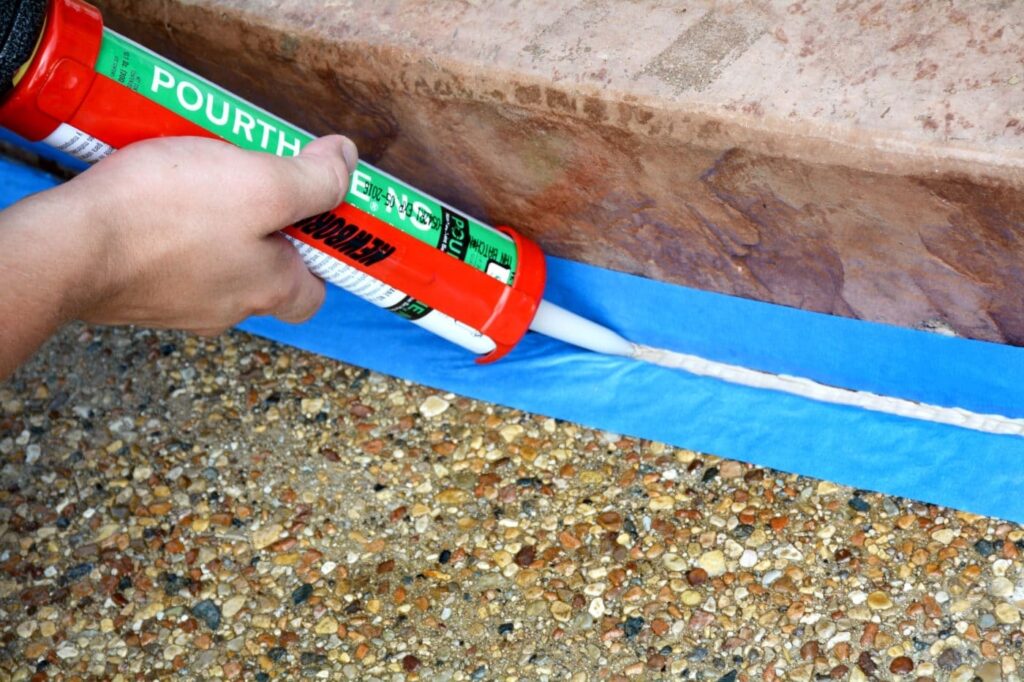
In the construction industry, the terms “sealant” and “caulk” are often used interchangeably. On the surface, both materials are used to fill gaps and joints. However, from a performance standpoint, they are fundamentally different products designed for very different applications. For distributors, contractors, and construction professionals, understanding the distinction between a high-performance construction joint sealant and a general-purpose caulk is critical to avoiding premature failure, costly callbacks, and compromised building envelope performance.
When joint sealing is treated as a commodity decision rather than a performance decision, projects are exposed to unnecessary risk. The correct material selection directly impacts durability, movement capability, weather resistance, and long-term service life. Using a caulk where a construction joint sealant is required can undermine even the best-designed building envelope systems.
What Is a Construction Joint Sealant?
A construction joint sealant is a high-performance elastomeric material specifically engineered to accommodate joint movement while maintaining adhesion to the substrates on either side. These sealants are typically manufactured using advanced chemistries such as polyurethane, silicone, polysulfide, or silyl-terminated polyether (STPE). They are designed to perform in demanding environments, including exterior exposure, dynamic joints, and building envelope transitions.
High-performance joint sealants are formulated to deliver significant movement capability, often ranging from plus or minus twenty-five percent to plus or minus fifty percent or greater, depending on the product classification. This means the sealant can stretch and compress repeatedly without losing adhesion or tearing internally. In real-world construction conditions, where temperature fluctuations and structural loads constantly cause expansion and contraction, this elasticity is essential.
In addition to movement capability, construction joint sealants are designed for durability. Many offer service lives ranging from ten to twenty years when properly installed. They provide strong adhesion, minimal shrinkage, excellent UV resistance, and reliable weathering characteristics. These attributes make them suitable for expansion joints, control joints, fenestration perimeters, tilt-up panel joints, parking structures, and infrastructure applications.
What Is Caulk?
Caulk, by contrast, is generally considered a lower-performance gap filler. Most latex and acrylic caulks are intended for interior applications or cosmetic detailing rather than structural or building envelope performance. These products are commonly used around window trim, baseboards, drywall transitions, sinks, and molding where aesthetic appearance is important but significant joint movement is not expected.
Typical latex or acrylic caulks offer limited movement capability, often in the range of ten to twelve percent. Their service life is usually much shorter than that of elastomeric sealants, often lasting only two to four years depending on exposure conditions. While caulks are often paintable and easy to apply, they are not designed to withstand the demands of exterior expansion joints or high-movement applications.
For interior finish work, caulks serve a practical purpose. They provide a smooth, paint-ready surface and help conceal small gaps between materials. However, when used in exterior construction joints or areas subject to significant movement, caulks can crack, lose adhesion, and fail prematurely.
Movement Capability: The Defining Performance Difference
One of the most important distinctions between a sealant and a caulk is movement capability. Buildings are dynamic structures. Exterior walls, concrete slabs, and structural components expand and contract with temperature changes. If the joint filler cannot move with the substrates, stress builds within the material.
High-performance construction joint sealants are engineered to absorb this stress through elasticity. They maintain adhesion to the joint interface while stretching or compressing as needed. Caulks, on the other hand, typically lack the flexibility required for these conditions. When subjected to movement beyond their limited capacity, they crack or debond.
For contractors, this difference is not theoretical. Installing the wrong product in a high-movement joint can lead to visible cracking within a short period of time. Water infiltration may follow, leading to more extensive damage behind the joint.
Durability and Weather Resistance in Exterior Applications
Exterior construction environments expose materials to ultraviolet radiation, moisture, freeze-thaw cycles, and temperature extremes. Construction joint sealants are formulated to resist these conditions. Silicone sealants, for example, are known for excellent UV resistance and long-term flexibility. Polyurethane sealants provide strong adhesion and toughness in many commercial applications. STPE and hybrid sealants offer weather resistance and compatibility with building envelope systems.
Most latex and acrylic caulks are not designed for prolonged exterior exposure in dynamic joints. UV degradation, moisture penetration, and temperature fluctuations can quickly compromise their integrity. Even if a caulk appears to perform initially, long-term durability is rarely comparable to that of a true elastomeric joint sealant.
Application Suitability: Matching the Product to the Project
The key to avoiding confusion is matching the product to the application. If the joint is part of the building envelope, exposed to weather, expected to accommodate movement, or critical to waterproofing performance, a high-performance joint sealant should be specified. If the application is interior, cosmetic, and subject to minimal movement, a caulk may be appropriate.
This distinction becomes especially important in large commercial construction projects, tilt-up buildings, parking decks, and infrastructure work. These projects rely on expansion joints and control joints to function properly. Using a product without sufficient movement capability undermines the entire joint design.
Elevating the Conversation Beyond Price
For distributors and contractors, the sealant versus caulk discussion should not revolve solely around price. Instead, it should focus on performance requirements, service life, substrate compatibility, and exposure conditions. Educating customers about these differences positions construction professionals as trusted advisors rather than commodity suppliers.
In today’s construction environment, where building envelope performance and durability are closely scrutinized, understanding the difference between a sealant and a caulk is more than a matter of terminology. It is a matter of protecting structural integrity, preventing moisture intrusion, and ensuring long-term performance.
Construction joint sealants are engineered materials designed to perform under stress, movement, and environmental exposure. Caulks serve a different, more limited role. Recognizing that distinction is essential to delivering durable, high-performing buildings that meet design expectations and stand the test of time.
Joint Sealant Resources

POURTHANE NS
POURTHANE NS is a one-component, moisture-curing, non-sag polyurethane joint sealant designed for vertical and overhead applications. It provides strong adhesion…
POURTHANE SL
POURTHANE SL is a premium, self-leveling polyurethane joint sealant designed for sealing horizontal concrete joints. This one-component, moisture-curing formula offers…

HS-1 SL
HS-1 SL is a one-part, self-leveling sealant designed for use in horizontal concrete joints, including pool decks and other pedestrian…

SOF-SEAL
Cold-applied SOF-SEAL low modulus horizontal joint sealant is a premium-grade, pourable, two-component sealant composed of a special combination of polymeric…

POLY-JET LOX
POLY-JET LOX is a one-component, moisture-curing polysulfide joint sealant formulated for concrete joints and cracks in areas exposed to liquid…

KOOL-ROD
KOOL-ROD is a closed-cell foam backer rod used to support cold-applied sealants in construction joints. It helps control sealant depth,…
Request More Information
To contact your local W. R. MEADOWS representative or for general correspondence, please click here. If you need immediate assistance, please call (800) 342-5976. Thank you!


