Canada
 Français
 Español
 International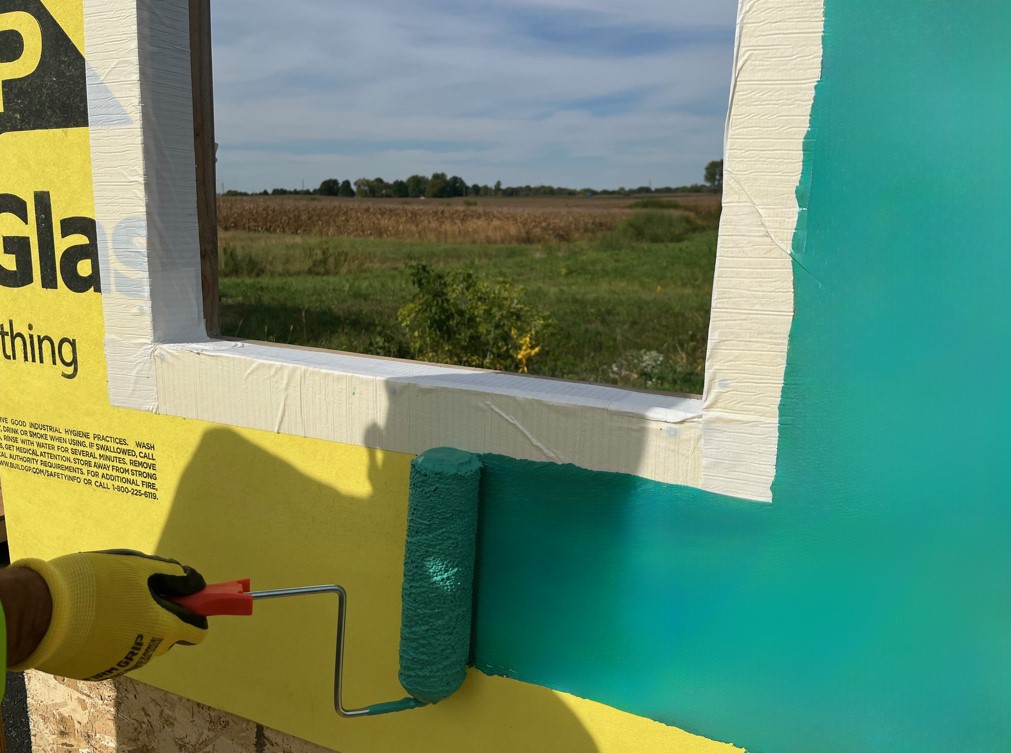
When It Makes Sense & Why It’s Gaining Ground in Modern Wall Assemblies
As building codes evolve and expectations around energy efficiency, durability, and occupant comfort continue to rise, air barrier systems have become a critical component of high-performance wall assemblies. Among the various technologies available today, Silyl-Terminated Polyether (STPE) has emerged as a compelling option for fluid-applied air barriers, particularly in above-grade applications where flexibility, permeability, and long-term durability matter.
This article explores what STPE technology is, why it’s being used in air barrier applications, and when it may be the right choice for a project. Rather than focusing on individual products, the goal here is to provide a practical understanding of how STPE-based materials function within a building enclosure, including both fluid-applied air barriers and liquid flashing components, and what advantages they can offer to designers, installers, and building owners.
What Is STPE Technology?
STPE stands for Silyl-Terminated Polyether, a polymer technology that combines a polyether backbone with moisture-reactive silane end groups, enabling elastomeric, moisture-cured membranes. When exposed to ambient moisture, STPE materials cure into a flexible, elastomeric membrane without relying on conventional environmentally hazardous phthalate plasticizers.
In air barrier and liquid flashing applications, this chemistry allows for single-component, moisture-cured systems that can be applied directly to common substrates and form seamless membranes.
Why STPE Is Being Used in Air Barriers
Air barriers must do more than simply block air movement. They must integrate into complex wall assemblies, accommodate substrate movement, resist water intrusion, and remain durable over the life of the building. STPE technology addresses many of these demands simultaneously.
- Permanent Flexibility – One of the defining characteristics of STPE chemistry is that they are internally plasticized, having inherently built-in back-bone flexibility. Unlike materials that rely solely on phthalate plasticizers or oils to create flexibility, STPE membranes maintain elasticity without additives that can migrate or leach out due to their internally flexible chemistry over time.
This is particularly important in wall assemblies subject to thermal cycling, differential movement, or minor cracking. An air barrier that remains flexible helps maintain continuity and performance even as substrates expand, contract, or shift.
- Vapor Permeability for Wall Assembly Drying – STPE air-barriers utilize a moisture-cured, reactive chemistry, which allows for a significantly broader range of application conditions (temperature, humidity, expected rain or snow) while ensuring more consistent film formation and membrane cure.
In comparison, water-based systems rely primarily on the evaporation of water, which can be influenced by ambient temperature and humidity. In certain conditions, such as lower temperatures or higher humidity, drying times may be extended, which can impact construction schedules or require additional planning to ensure proper film formation before exposure to weather. Similarly, in colder conditions, these systems may require more time to fully develop performance properties.
Solvent-based systems may also present considerations, including VOC compliance and reduced environmental acceptability. In addition, these systems rely on solvent evaporation, which is also highly dependent on ambient temperature and jobsite conditions.
STPE chemistry, however, cures through a reactive mechanism and is therefore less sensitive to cold temperatures and high humidity. STPE membranes typically develop early rain resistance, often within as little as one hour, helping prevent installed membrane damage and reducing the risk of compromised performance.
Overall, STPE technology provides applicators with a wider installation window, reduces the likelihood of damage or performance issues, and helps avoid costly construction delays—making it a win-win for all parties.
- Vapor Permeability for Wall Assembly Drying – Many STPE-based air barriers are inherently designed to be vapor permeable, allowing moisture vapor to pass through the membrane while still resisting air leakage and liquid water intrusion.
For designers, this vapor permeability supports drying potential within wall assemblies, an increasingly important consideration in mixed climates and high-performance building envelopes. By allowing vapor diffusion while controlling bulk air movement, STPE air barriers help balance moisture management rather than trapping it within the wall.
- Seamless, Monolithic Application Fluid-applied air barriers inherently eliminate many of the seams and laps associated with sheet membranes. STPE formulations are particularly well-suited to form continuous, monolithic membranes across irregular surfaces, rough substrates, and complex transitions.
This seamless nature simplifies detailing around penetrations, fasteners, and changes in plane, areas where air leakage often occurs. Once cured, the membrane remains continuous even when fasteners are installed, contributing to consistent air barrier performance.
- Strong Adhesion to Common Substrates STPE air barriers are both chemically and adhesively compatible with a wide range of commonly used construction materials, including:
- Concrete and masonry
- CMU
- Fiberglass mat-faced gypsum sheathing
- Exterior-grade plywood and OSB
- Rigid insulation boards
- Metal substrates
This broad compatibility makes STPE systems adaptable across many wall designs, whether in new construction or retrofit projects. Strong adhesion, even to slightly damp surfaces, can also reduce delays caused by weather or jobsite conditions.
The Role of STPE Liquid Flashing in the Air Barrier System
Beyond field-applied air barrier membranes, STPE technology is also commonly used in liquid flashing applications, where detailing continuity is critical. Liquid flashing is typically applied at rough openings, transitions, penetrations, and changes in plane, locations that are often the most vulnerable to air and water leakage.
Performance Benefits That Matter on the Jobsite
Beyond chemistry, STPE technology brings several practical advantages that resonate with contractors and installers.
Rapid Rain Resistance – Many STPE-based materials develop resistance to rainfall shortly after application. This quick rain resistance can be especially valuable in fast-paced construction schedules, reducing the risk of wash-off and minimizing weather-related delays.
UV Exposure Tolerance – Extended UV exposure tolerance offers added flexibility in sequencing trades. While air barriers and flashings are not intended to remain exposed indefinitely, increased UV resistance provides a buffer when cladding installation is delayed.
Low-Temperature Flexibility – In colder climates, flexibility at low temperatures is critical. STPE membranes are designed to remain pliable, passing low-temperature crack-bridging per ASTM C1305 in cold conditions, helping prevent cracking that could compromise air barrier or flashing continuity.
When Is STPE Technology a Good Fit?
STPE-based air barriers and liquid flashings are particularly well-suited for:
- Above-grade wall assemblies where vapor permeability is desired
- Cavity wall and masonry systems
- Projects requiring seamless detailing at rough openings and transitions
- Buildings where long-term flexibility and durability are critical
- Installations where fire performance and non-asphaltic materials are preferred
- Applications seeking lower-toxicity formulations, such as phthalate- and isocyanate-free systems
- Cooler climates facing earlier winters, helping to extend construction seasons
For architects and specifiers, STPE technology offers a balanced solution that aligns with modern enclosure design principles; supporting air tightness, moisture control, and long-term performance without relying on legacy materials that may present limitations.
A Technology Aligned with Modern Building Enclosure Design
As building envelopes become more sophisticated, material selection plays an increasingly important role in long-term performance. STPE technology reflects a broader shift toward durable, flexible, and vapor-aware enclosure solutions that support both energy efficiency and moisture management.
By understanding how STPE-based air barriers and liquid flashings work together, and where they fit best; architects, contractors, and distributors can make more informed decisions when evaluating air barrier strategies for their projects. Rather than serving as a one-size-fits-all solution, STPE technology offers a versatile option for assemblies where adaptability, performance consistency, and long-term resilience are priorities.
In an era where building enclosures must do more with fewer compromises, STPE has earned its place as a technology worth understanding.
Overall, STPE technology provides applicators with a wider installation window, helps reduce the likelihood of damage or performance issues due to environmental conditions, and supports more efficient construction timelines, making it a valuable solution for modern building practices.
Request More Information
To contact your local W. R. MEADOWS representative or for general correspondence, please click here. If you need immediate assistance, please call (800) 342-5976. Thank you!