
 Canada
 Français
 Español
 International
Last month’s article talked about cleaning up old materials and classifying them for disposal. Now that some free space has been opened at your facility up let’s talk about warehouse operations. Most points of distribution have some sort of warehouse affiliated with the operation. There are several key areas that need to be evaluated in order to operate a warehouse safely. First and foremost, materials movement is a key activity in a warehouse. Moving materials, unloading trucks, loading trucks, and placing materials into storage occur constantly in a warehouse. Forklift operators are typically completing all these touches in the warehouse.…
Blog
Harnessing Global Insights for Enhanced Sustainability

A Journey through Greenbuild 2023 W. R. MEADOWS is not just a brand; we are a community of professionals passionately committed to innovation, quality, and sustainability. Today, we shine the spotlight on Kimberly Lombardozzi, our dedicated Sustainability Manager, who recently attended the Greenbuild International Conference + Expo 2023, a global confluence of green building professionals. Here’s a glimpse into how this enriching experience is set to augment our sustainability initiatives. For more information, please visit: https://informaconnect.com/greenbuild/ TRUE Standard Session The event kicked off with Kimberly immersing herself in an educational session centered around the TRUE Standard. This session was a…
Partnering with YouthBuild to Construct a Better Future

W. R. MEADOWS has partnered with YouthBuild, a non-profit organization that helps young people from low-income backgrounds obtain job training and education to provide valuable opportunities to at-risk youths. This partnership is aimed at providing the necessary skills to help these young people succeed in the construction industry, while also empowering them to take control of their lives and build a brighter future. The partnership between W. R. MEADOWS and YouthBuild is part of a wider effort to address the growing skills gap in the construction industry. According to a recent study, the construction industry is facing a shortage of…
Elevating Sustainability: Biobased Content Verified Products at W. R. MEADOWS & BLUE RIDGE FIBERBOARD

In a world increasingly attuned to the ecological footprint of our industries, W. R. MEADOWS, INC., and our esteemed subsidiary, BLUE RIDGE FIBERBOARD, INC., are proud to announce several of our products now boast third-party verified biobased content, complying with the stringent criteria set by the USDA’s BioPreferred® Program. The Heart of Biobased Innovation: The USDA BioPreferred Program The BioPreferred Program, initiated by the USDA under the 2002 Farm Bill and rejuvenated with the 2018 Farm Bill, is more than a policy—it’s a movement towards a greener, more sustainable future. This program is designed to increase the purchase and use…
How to Choose the Right Concrete Pool Deck Sealer

If you’re like most homeowners with in-ground pools, you’re flummoxed by the endless flow of information for decorative concrete maintenance and concrete pool deck concrete sealants. Even your concrete—if it could talk—would admit it’s a lot to absorb. (FYI, if you’re ever doing an online search, concrete pool construction products are also called “construction liquids.”) Please note, this article refers only to concrete pool decks for inground pools, and not the wooden decks that tend to surround above-ground pools. Fortunately, DECK-O-SEAL’s Division Manager Jim Dill is not one to mince words (DECK-O-SEAL is a subsidiary of W. R. MEADOWS). Jim…
How to Waterproof A Below-Grade Concrete Block Foundation: 7 Steps to Know Now
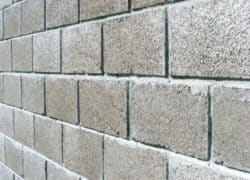
Concrete blocks have been used for many years as the alternative to a poured concrete foundation wall. Since concrete blocks are porous and concrete block foundations have numerous joints, they can be prone to water leaks. This is why waterproofing this substrate is so critical for the long-term performance of a concrete block foundation. On the positive side, they are strong, and have some thermal and sound insulation properties, which reduces energy usage. They are fire-resistant, and the addition of rebar adds structural strength to the foundation. Concrete block foundations are well suited to seismic areas, e.g., areas that are…
Not All Mil Thicknesses Are Created Equal: Understanding Underslab Vapor Barriers

In the construction industry, underslab vapor barriers play a pivotal role in protecting buildings from moisture intrusion, soil gases, and other external elements that can compromise the integrity of the structure. With a plethora of product choices, it can feel daunting to know which product will best fit your project. The mil thickness of a vapor barrier is often considered one of the primary indicators of its performance and durability. However, not all mil thicknesses are created equal, especially when comparing different product’s engineering, such as if polar or non-polar molecules were used, like EVOH (Ethylene Vinyl Alcohol) resin or…
Silicone Roof Coatings

Silicone Roofing vs. Roof Replacement: The Smart-Choice Explained Building owners are often faced with a critical question: should they opt for a complete roof replacement, or consider a more cost-effective, less disruptive, and sustainable alternative, such as liquid-applied roof coatings? But how do you know what is the best option for you? This guide will provide valuable insights into why liquid-applied roof coating might be a more cost-effective and sustainable option compared to traditional roof replacement, as well as discuss all the liquid-applied options and how to find out if liquid-applied will work for you. UNDERSTANDING THE KEY DIFFERENCES Roof…
5 Reasons Your Building Needs a Below-Slab Vapor Barrier

There is much debate over the role and merit (as well as need) for vapor barriers within varied sects of the construction industry—however, there is a simple truth no matter what side of the discussion you happen to find yourself on. Ultimately, the systems under your building and above the concrete slab need protection, too, and simply leaving HVAC systems, wiring and plumbing, or the framework itself exposed offers far too much room for error—and seriously tempts Murphy’s Law. There is no sense in leaving the fate of your building up to chance, because let’s face it—damage can occur above…
A New Home For Bioscience Research (Case Study)

Print Version Pursuing the cutting edge in research and education has always been a focus at the University of Arizona—located in Tucson. And this intent was evident when the University first set out to build a new hub, on campus, to house bioscience research themes that included work on biosensors, bioimaging, bioinformatics, healthy aging, genomics technology, and precision medicine. The building itself is a joint collaboration between the University of Arizona Office for Research, Discovery, and Innovation and the University’s Department of Health Sciences. It was designed by ZGF Architects and BWS Architects, and the general contractor was DPR Construction.…
SAFETY ON THE DOCK

Your warehouse is adequately protected and in good order. The next area that we will look at in regard to safety is the dock. The loading dock is an essential part of your business with a lot of activity occurring there. Materials may be delivered or loaded for transport. Numerous forklift operators and pedestrians may be present at any given time to get these tasks completed. With all this activity, it’s not a surprise that twenty-five percent of industrial accidents occur on loading docks. This equates to hundreds of thousands of incidents and numerous fatalities. So, let’s look at ways…
How To Waterproof Outdoor Concrete Planter Boxes

Whether your property is a college campus, a corporate building, or Scrooge McDuck’s mansion, most elaborate landscaping designs will incorporate decorative concrete planters outside. And they need waterproofing. We’ve had enough web visitors inquiring about waterproofing outdoor planter boxes to trigger me writing an article, so this blog will explain why you need to waterproof outdoor concrete planters and how you can go about waterproofing your outdoor planters. 3 REASONS WHY YOU NEED TO WATERPROOF YOUR OUTDOOR CONCRETE PLANTERS Plants Can’t Soil Themselves. Unlike toddlers, plants cannot soil themselves, so gardeners need to maintain careful control over their plants’ soil…
GETTING THE MOST OUT OF YOUR ACRYLIC SEALER

Welcome back to our blog! As you know, we always strive to provide you with information that enriches your understanding of construction materials and improves your ability to get the most life out of our products. Today, our focus is on a product that’s a favorite among professionals and DIY enthusiasts alike: the acrylic sealer. While these sealers are celebrated for their aesthetics and durability, it’s important to recognize that several factors can wear down their lifespan. In this blog, we will delve into these factors, arming you with the knowledge to optimize your sealer’s longevity and maintain the aesthetic…
What Is the Difference Between Cold Fluid-Applied Waterproofing and Damp-Proofing?

The art of waterproofing started 13,000 years ago, developed to become the third trade after carpentry and masonry. As we became an agrarian society, farmers had to protect their grain from moisture and rotting during the cold months to prevent starvation. This Neolithic Era also brought boat-building and sea voyages into play to foment trading, so they devised a bitumen made from the surface of peat bogs, which wasn’t unlike the asphalt we use today. And then there were the Egyptians, whose Pyramids of Giza tombs were pristine despite the flooding of the nearby Nile River, so even in 3600…
W. R. MEADOWS VOCOMP SERIES

Unveiling the differences between VOCOMP-20, VOCOMP-25, & VOCOMP-30 W. R. MEADOWS has long been a trusted name in the concrete and construction industry, providing innovative solutions and products designed to meet the needs of professionals worldwide. One of their flagship product lines, the VOCOMP series, offers concrete curing and sealing compounds that are environmentally friendly and compliant with VOC regulations. In this blog, we will delve into the VOCOMP series and specifically compare the VOCOMP-20, VOCOMP-25, and VOCOMP-30, highlighting their unique features and differences. Cure and Seal Products: The VOCOMP Series Overview The VOCOMP series from W. R. MEADOWS features…
WHEN IS THE BEST TIME TO APPLY ACRYLIC SEALERS: Here’s What You Need to Know

Summer is upon us again, and building owners and businesses alike are getting ready to host outside events and so are thinking about prepping their concrete for protection and aesthetics. Sealing your concrete IS an essential step in maintaining its durability, appearance, and lifespan; however, it’s crucial to choose the right time to complete this task to ensure the sealer’s optimal performance. But which season is really the best time to seal your concrete with an acrylic sealer? Well, let’s dive into that question to find an answer! WHAT IS AN ACRYLIC SEALER? Acrylic sealers are liquid membrane-forming compounds that,…
SUSTAINABILITY CORNER

DEALING WITH OUT OF DATE/OFF SPEC PRODUCTS Spring is just around the corner and is a great time to complete clean-ups both at home as well as work. So when the warehouse is cleaned up and a few old containers are found, how should these materials be handled? Waste materials are regulated at both the state and federal level and the rules for disposal must be complied with. By doing a little leg work, a generator of waste can keep costs to a minimum as well as comply with regulations regarding proper disposal. The first step is to identify what…
MARKETING MINUTE

Normally, new technology takes a little bit of time to take off; regardless if it becomes life-altering, like the cell phone and television set, or a game changer for your industry, like social media. However, ChatGPT has taken the digital era by storm. In only five days from launching, ChatGPT acquired over a million users! Keep in mind, Netflix took 3.5 years, Facebook took 10 months, and Instagram took 2.5 months (which was mind blowing at the time) to reach that number of users. As of February, 2023, it now has over 100 million users worldwide! But let’s break this…
Why is Your Concrete Blotchy (and How to Fix it)

Have you ever walked past a home with discolored concrete in the driveway? It’s lighter here and darker there, creating a blotchy effect that you know couldn’t have been intentional. Looking at the chaotic design, you can’t help but wonder what went wrong,… and how you can avoid making a similar mistake with your own concrete projects in the future. Concrete discoloration is not a rare event Laying concrete isn’t an exact science, and there are a variety of factors that can contribute to concrete discoloration from the very beginning. These factors include: Variability in concrete mixtures The use of…
W. R. MEADOWS App

The New W. R. MEADOWS Mobile App Is Now Available! This app features the best of our website in a compact, user-friendly mobile experience. It is designed for those on jobsites, traveling, or on the go. The mobile app is an industry-leading resource to help put all the W. R. MEADOWS information you need on your mobile device. You’ll gain easy access to all W. R. MEADOWS information and data. To install the new W. R. MEADOWS mobile app: iPhone/iPad – Visit https://app.wrmeadows.com on Safari – Press the ‘share button’ – Scroll down and press the ‘Add to Home Screen’…
When the Weather Outside is Frightful

Building Envelope Building Materials Made for Low Temperatures If you’re specifying for winter-grade products, or you’re a contractor working outside in low temperatures, you’ll want to bookmark this article. W. R. MEADOWS has a portfolio of building envelope products – air barriers, vapor barriers, waterproofing membranes, accelerators, grout and form release agents — that ignore the cold weather to keep on keepin’ on, to borrow from Curtis Mayfield. Some of our products handle temperatures as low as -18° Celsius, or -62.6° Fahrenheit. Below is your convenient list of our winter-grade and low-temperature building envelope products, organized by the temperatures they…
What Is a Concrete Expansion Joint?

When I was a kid, “Step on a crack, break your mama’s back” was echoed throughout the schoolyard, often the recitation as girls were jumping rope. Just to escalate everyone’s anxiety, some kid added a second idiom, “Step on a line, break your father’s spine.” These playground superstitions had us kids on high alert. Our otherwise carefree lives were disrupted by those horizontal sidewalk cracks. Until now, I never knew those sidewalk cracks had a name: concrete expansion joints. They also go by the name “control joints.” What’s the Point of a Concrete Expansion Joint? If concrete were elastic, contractors…
What Contractors Are Discovering About Our HRM 714 Waterproofing System Coverage

We’ve been fielding a lot of online chat queries lately about HRM 714, so we thought it was a good time to blog about it. If you’re unfamiliar, HRM 714 is our hot-applied, rubberized asphalt waterproofing membrane. We innovate our products to add muscle to your structures’ protection, and HRM 714 is no exception. (See our University of Arizona HRM 714 Case Study.) HRM 714 is Ideal for These Projects: Waterproofing Bridges Parking Lots Plazas Promenade Decks Tunnels Pedestrian Concourses, and Projects Benefiting from Monolithic Waterproofing Membrane The question we’ve been asked the most lately is about how much coverage…
What IS Negative Side Waterproofing?

Negative-side waterproofing is the act of applying waterproofing materials to the negative, or dry side, a.k.a. the interior side of your building’s foundation or wall. Building owners will often fill the maximum amount of property square footage possible with their new structure, leaving little room on the exterior of their structure’s property for the amount of excavating needed to do positive-side (or exterior) waterproofing. In another scenario, maybe you have a leak in a deep elevator pit. Perhaps it’s located in a downtown Toronto building where there is no way you can access that building’s exterior to waterproof it without…
Which Products Should I Use: Positive Side vs. Negative Side vs. Blindside Waterproofing

I’m sure someone has “an app for that,” but this article is your checklist to help you identify which waterproofing products to specify or apply to the positive, negative or blindside of a building envelope, because it can be confusing. Your first task will be essential: a full site inspection. This will determine some of your site concerns when you’re selecting your waterproofing system. Having this intelligence upfront enables you to identify the most durable long-term solution. Here are W. R. MEADOWS’ recommendations for below-grade waterproofing: POSITIVE SIDE: All forms of waterproofing products can be used on the positive side—sprayable…
When to Use a Fluid-Applied Air Barrier or a Sheet-Applied Air Barrier: How to Tell

Air barriers are your first line of defense in protecting your building from moisture. Why is moisture protection so important? You can find the answer in one of the most unsettling statistics to emerge in 2016 by the Australian Institute of Waterproofing: “…water leaks and the resulting damage from water leaks accounted for up to 80% of all building defects.” Eighty per cent! Indoor air quality (IAQ) issues from mold in remodeled and new buildings is estimated at 30% per FerroCanada. One in 50 homeowners will file an insurance claim for mold, and 93% of chronic sinus infections have been…
What’s the Difference Between Positive Side Waterproofing and Negative Side Waterproofing?

When junior architects or contractors are starting out, they get bombarded with new terms and a whole new language, so we want to make it our mission at W. R. MEADOWS to ensure everyone understands the most commonly used concrete, waterproofing, and construction terms. To that end, we recently were asked, “What’s the difference between positive-side and negative-side waterproofing?” Today’s blog serves to answer that question. Positive-Side Waterproofing The first thing to know is that positive-side waterproofing is on the outside of the structure, which is sometimes referred to as the “wet” side of the wall. This prevents any water…
Waterproofing Systems for Plaza Decks

W. R. Meadows’ Wendy Talarico, LEED AP, Architectural Services Specialist, explores the waterproofing world of plaza decks in an article published in The Construction Specifier. Plaza decks involve a variety of sizes, shapes and surfaces, resulting in confusion about the best way to waterproof them. “A plaza deck is a layer-cake of materials: the waterproofing membrane provides the base layer and the rest—protection layer, drainage course, insulation (or sometimes a fill layer of sand or gravel), and wearing or traffic surface—is ‘overburden.’ How those layers are designed depends partially on the design of the slab itself, which, in turn, depends…
Chat with W. R. MEADOWS!

If you have been on our website recently, you may have noticed that there is a new chat in town. The chat is located in the bottom right corner of wrmeadows.com. I bet you’re wondering, how does that help me? Here are some utilities that the chat function handles: Need Product Resources, Local Rep, Locate a Distributor, Technical Question, and Other. “Need Product Resources” is the chat button that would encompass, you guessed it, product resources. Most of this content is existing on our website already, but it can be time-consuming to rummage through it to find something small. So,…
SUPPLY CHAIN UPDATES

In the topsy-turvy world of supply chain and logistics, there are some hints at the situation improving. The Covid-19 cases are on a downward trend. The ports are working faster than they have in the past year. There is a container backlog, but not nearly like last year. Anyone in manufacturing or farming has cast their watchful eye on the fluctuating oil prices, which are impacting everything from your food prices to airline travel to Vaseline. U.S. freight is more expensive and fuel surcharges are getting out of hand. Everything is dependent upon the war in Ukraine. If it ceases…
What’s the Difference Between LIQUI-HARD and LIQUI-HARD ULTRA?

By: Dianne Carey Many architects, distributors, engineers and concrete contractors have asked us, “When should I specify/use LIQUI-HARD ULTRA? What’s the difference between LIQUI-HARD ULTRA and the original LIQUI-HARD?” How are they similar? Are there climates, locations, or geographies where one is an advantage over the other? Dianne Carey, director of technical services, has offered to help identify some technical features of the products, to help you identify the right product for your next concrete project. The Same… LIQUI-HARD and LIQUI-HARD ULTRA are clear, water-based, zero VOC, ready to use and can be used on interior and exterior applications. Both…
IS MODULAR BUILDING THE MODEL-T ASSEMBLY MODEL FOR THE CONSTRUCTION INDUSTRY?

Seasoned engineer Blair Davies is the partner behind two modular construction businesses, METALOQ and Catalyst Offsite. Blair recently joined W. R. MEADOWS Podcast hosts Riley Rowan and Jason Davoodi to share some of his insights on the rapid-fire interest he is seeing from developers for modular building. Blair was initially drawn to modular because of his engineering expertise in building facades. (He also has a background in aerospace and automotive engineering, which bring to bear some unique advantages in how they approach modular manufacturing.) Julian Bowron is his partner in both companies, with expertise in steel fabrication and supply chain,…
ARCHITECTS and SPECIFIERS: How Will eCommerce and ESG Trends Impact Your Warehouse and DC Building Designs?

How Do I Know If My Concrete Is Ready for a Penetrating Sealer?

Introducing the WATER DROPLET TEST The “water droplet test” is the industry standard for discerning if your concrete is ready for a penetrating sealer. We teach this simple method to distributors, contractors, and homeowners so they can visually identify the status of their concrete seal. Here’s the step-by-step application: STEP #1: Apply a water droplet to your concrete. When you want to know if your concrete needs a penetrating sealer, apply a small droplet of water to your concrete as seen here: STEP #2: Watch and wait. See if the water beads up, or if it absorbs into the…
UNO POWER: Why Should I Use a One-Step Concrete Cure and Penetrating Sealer Product?

You’ve been hearing about this single-step cure and penetrating sealer product on the construction sites for a while now, and you’re probably wondering, “Is this stuff cost-effective? Is it easy to use? What if it doesn’t last? Will my project benefit the most from a single-step cure and penetrating sealer product?” We get it. No one wants to be the guinea pig. That is why we were independent, third-party lab tested before we ever launched PENCURE OTC. PENCURE OTC demonstrated a similar chloride reduction and water absorption reduction rate as a 100% active silane placed on 28-day-old concrete. This blog will take…
How Do VOCs Affect My Construction Project?

If you’ve ever known that “new-car smell,” you’ve experienced VOCs. VOC is the acronym for “volatile organic compounds,” which specifiers and contractors seek to minimize in the products they construct with, especially since green building projects are mushrooming and environmental safety awareness is at an all-time high. In a new car, you can get exposed to off-gassing VOCs for up to six months after you buy it. (This is a great selling point for buying pre-certified vehicles). Studies have shown there are more than 60 VOCs detected in the average new car. VOCs are pervasive in our daily lives. It’s…
How to Achieve Less Stress and More Success

One Retired Contractor Teaches Small Business Owners His Secret to Early Retirement In the 1970s, AL LEVI and his two older brothers went to work with their father in their Long Island, New York contracting business. The brothers and their team of 70 performed plumbing, heating, air conditioning, and electrician services for Long Island outside of Manhattan. They serviced residential, commercial, and industrial accounts for a territory that was 115 miles, tip to tip. Raised in a family of serial entrepreneurs, AL’s grandfather owned a gas station in 1936. AL’s father started the contracting business that still thrives today. All…
THE SUPPLY CHAIN
Did America’s Covid-19 Shopping Spree Trigger Port Congestion? W. R. MEADOWS’ Supply Chain Manager Tony Spedale raised an interesting point during a recent internal discussion about California’s current port container ship congestion issue. It’s one many of us hadn’t factored in, and I thought it was worthwhile to share with you since we are all asking the big “WHY?” Here are Tony’s thoughts on the shipping delays and supply chain obstacles: “When Covid-19 hit, people were forced to stay home and get government stimulus, which was meant to be spent. The problem is, they spent their government stimulus money on…
Why Does My Pool Deck Joint Sealant Look Like Mushy Mastic? The 10-Minute Trick That Sets It Right Every Time

How Will Inflation Impact the Construction Industry?

Construction Economics Analyst Ed Zarenski Has Your Answers Ed Zarenski spent 42 years in construction, 30 of which he spent as a building project cost estimator and construction economics analyst. Today Bloomberg News, the Washington Post, The Financial Times, CNBC, Los Angeles Times, Marketwatch, Newsweek, strategy+business, Yahoo! Finance, ConstructechTV, Ontario Construction News and more seek Ed Zarenski’s crystal ball for deciphering what’s really happening in the construction industry, beyond the headlines. Ed also taught Advanced Construction Cost Estimating and Construction Economics for five years at the Worcester Polytechnic Institute, and writes an industry blog, Construction Analytics on EdZarenski.com, where he…